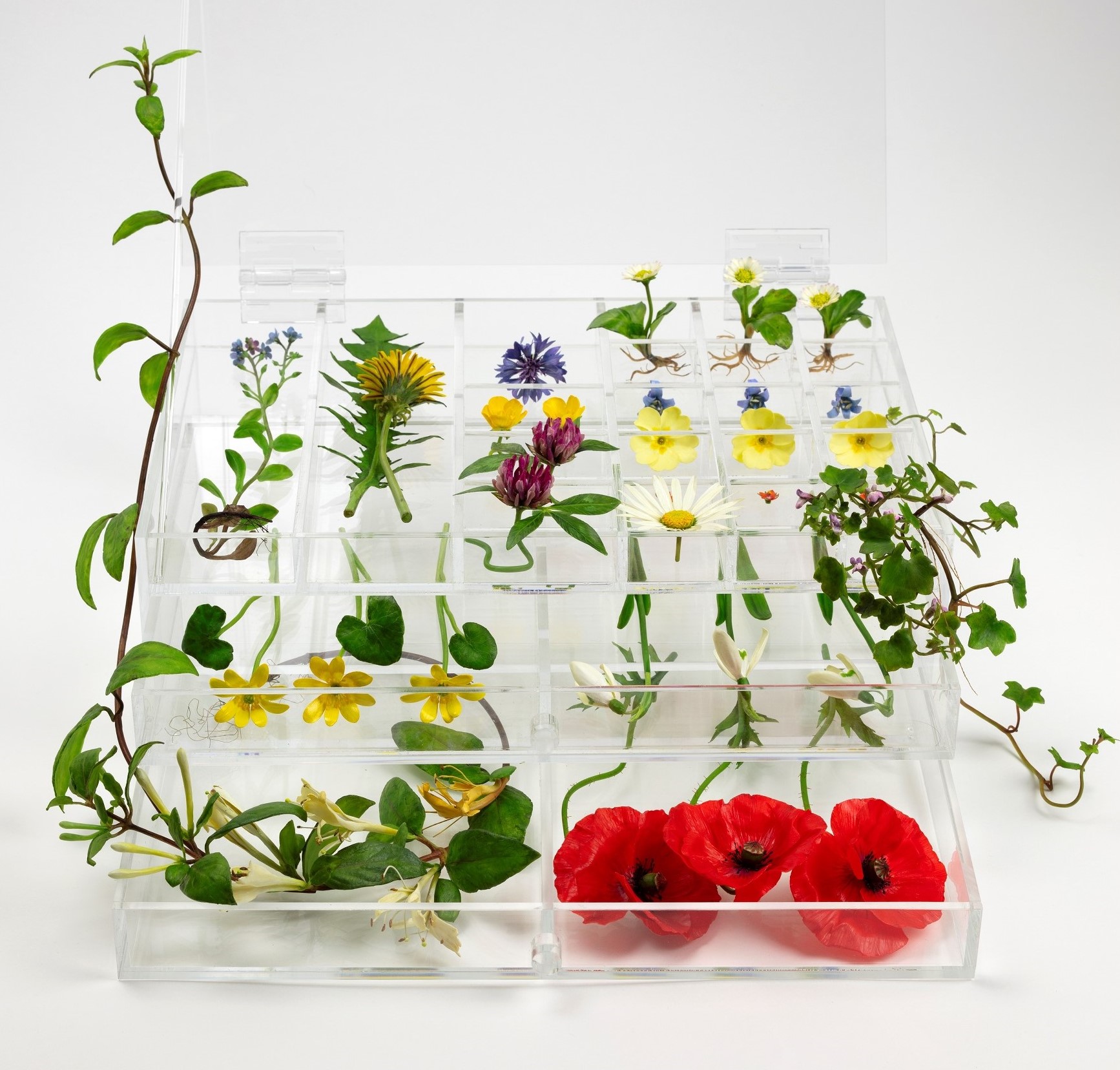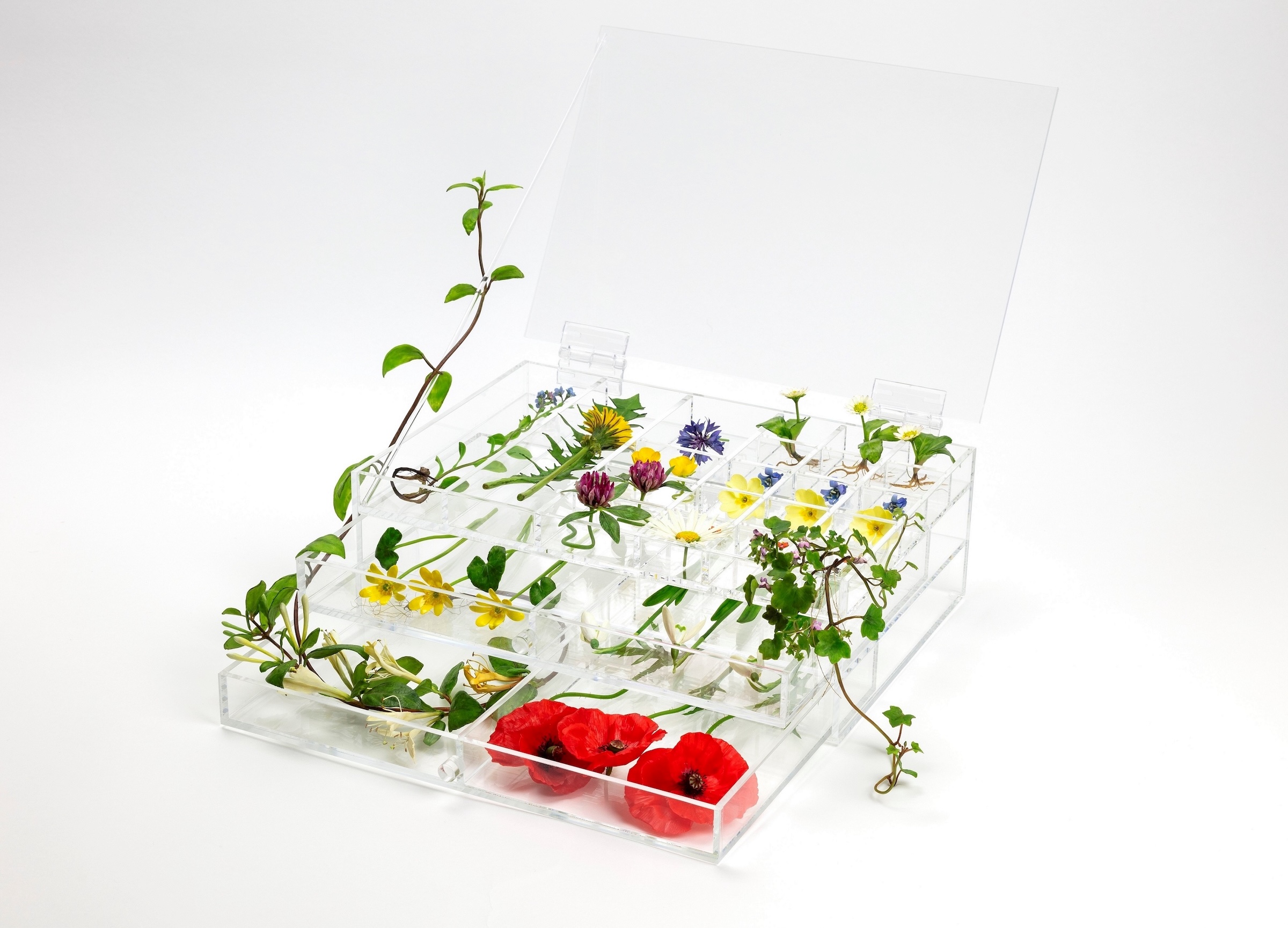
Treasure
2020
Dimensions – 30 x 20 x 30cm
Materials: Beeswax, pesticide residues in the beeswax (Azoxystrobin, Boscalid, Fluxapyroxad, Fenbuconazole, Penthiopyrad, Cyprodinil, Propiconazole, Metconazole, Pyraclostrobin, Trifoloxystrobin, Difenoconazole, Buprofezin, Chlorantraniliprole, Methoxyfenozide, Coumaphos, Piperonyl butoxide, Atrazine, Metolachlor, Trifloxystrobin, Fenpyroximate), tinned copper wire, tissue paper, dressmaking beads, cotton thread, silk fabric, dry ground artists’ pigments, acrylic paints, acrylic varnish.
Treasure was developed through a collaboration with entomologist Scott McArt at Cornell University, using honey bee wax collected from colonies in New York and New Jersey. Analysis identified multiple pesticide residues within the wax itself, which are listed as part of the material of the work. For Townsend, who had worked with wax for many years as both an artist and museum conservator, the discovery marked a significant shift in understanding. Accustomed to adding pigments, oils, and other substances to alter the material by hand, she became fascinated by the idea that the wax had already been altered through human agricultural activity and the environmental systems moving through it.