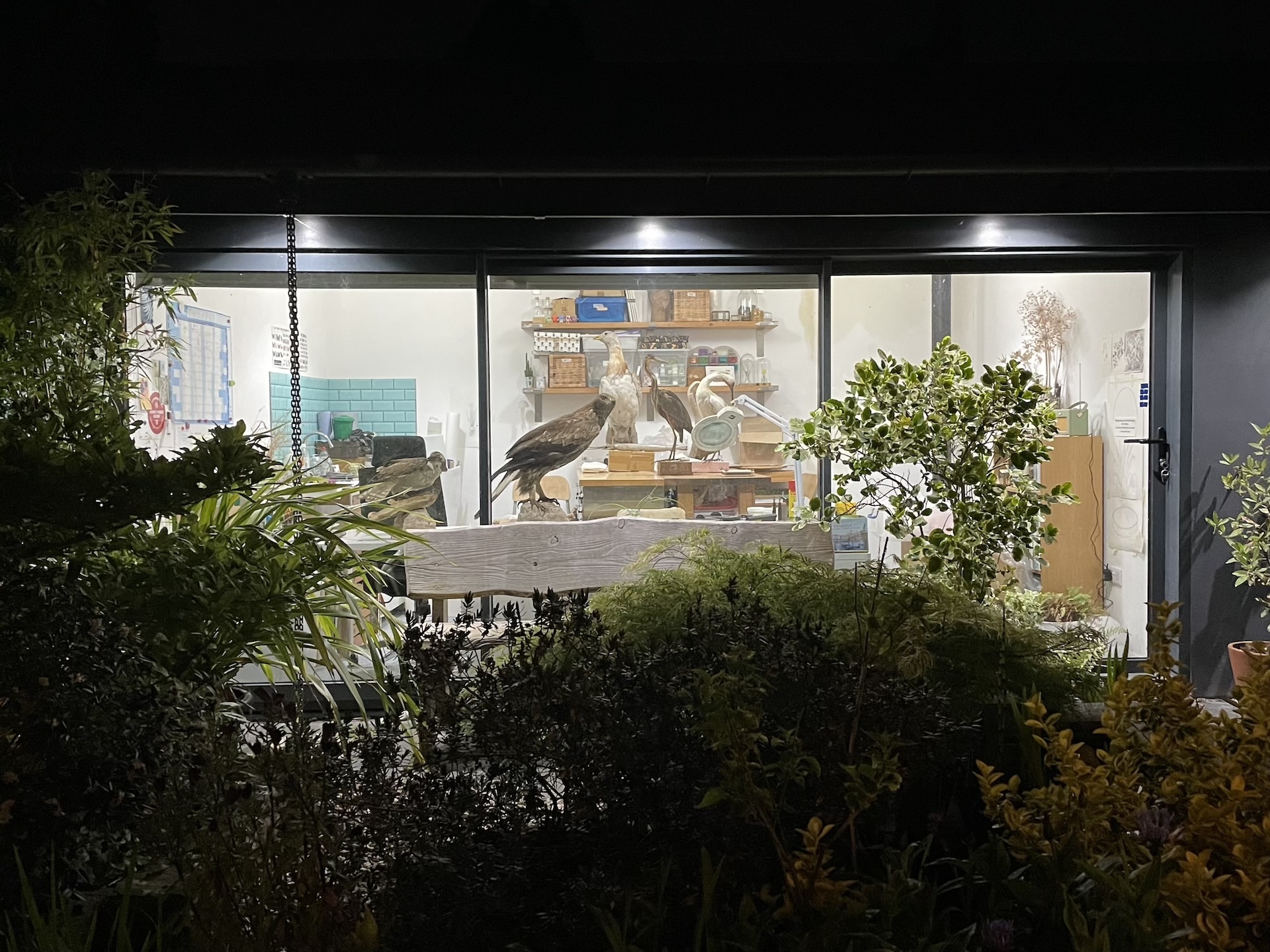
The studio sits at the end of my garden. Each day begins with a short walk past the pond, through a small, densely planted urban space. For many years, my work took place in the basement stores of the museum, in rooms where light, temperature and humidity were controlled, and the day could pass without a view of the sky. This space operates differently. The studio is lined with glass, and my desk sits directly against it.
When I look up, I am already in the garden.
In the warmer months, the doors slide back and the boundary dissolves. The garden is small but active, structured for pollinators, and closely observed. Bees move constantly between the plants, and when wax is heated in the studio, they are sometimes drawn inside. Birdsong carries alongside the sound of traffic and distant sirens from the city.
Inside, the space is compact and adapts depending on what is being worked on. Larger projects compress the room, and tables are moved and reconfigured as needed. In winter, a small stove keeps the space warm. The studio becomes enclosed and quiet. On rainy days, water runs down the rain chain outside, a familiar rhythm in Cardiff.
The studio supports both solitary and collaborative work. Long periods of focused making sit alongside conservation projects undertaken with colleagues. The scale of activity shifts from the close reconstruction of botanical forms in wax to larger works involving natural history specimens and mounts.
It is a place for sustained attention. At the end of the day, the return is immediate, back through the garden, past the pond, and into the house.