
A Study in Black and Gold
A Study in Black and Gold features scrambling blackberry (Rubus fruticosus) plants delicately sculpted using traditional wax flower-making techniques, alongside dried insect specimens donated by a museum curator. The works are mounted within American lime and glass entomology cabinet drawers.
The series is informed by the artist’s observations of nature within her urban environment, as well as by memories and experiences from her previous twenty-year career as a natural science conservator at the National Museum of Wales, and by the scientific collections in her care during that time. The Blackberry (Rubus) collection at the National Museum of Wales holds approximately 15,000 specimens and is recognised worldwide as a major scientific reference tool. The museum also houses one of the largest insect collections in the UK.
In these works, blackberries, which in the wild provide an important source of nectar for pollinators, appear to grow inside the entomology drawers alongside preserved bee specimens, highlighting their mutually beneficial relationship.
Created from a combination of natural beeswax and man-made paraffin wax, a by-product of the oil industry, and rendered in monotone colours, the works call attention to the complex impact of human activity on this relationship, while also celebrating the enduring value of scientific study.
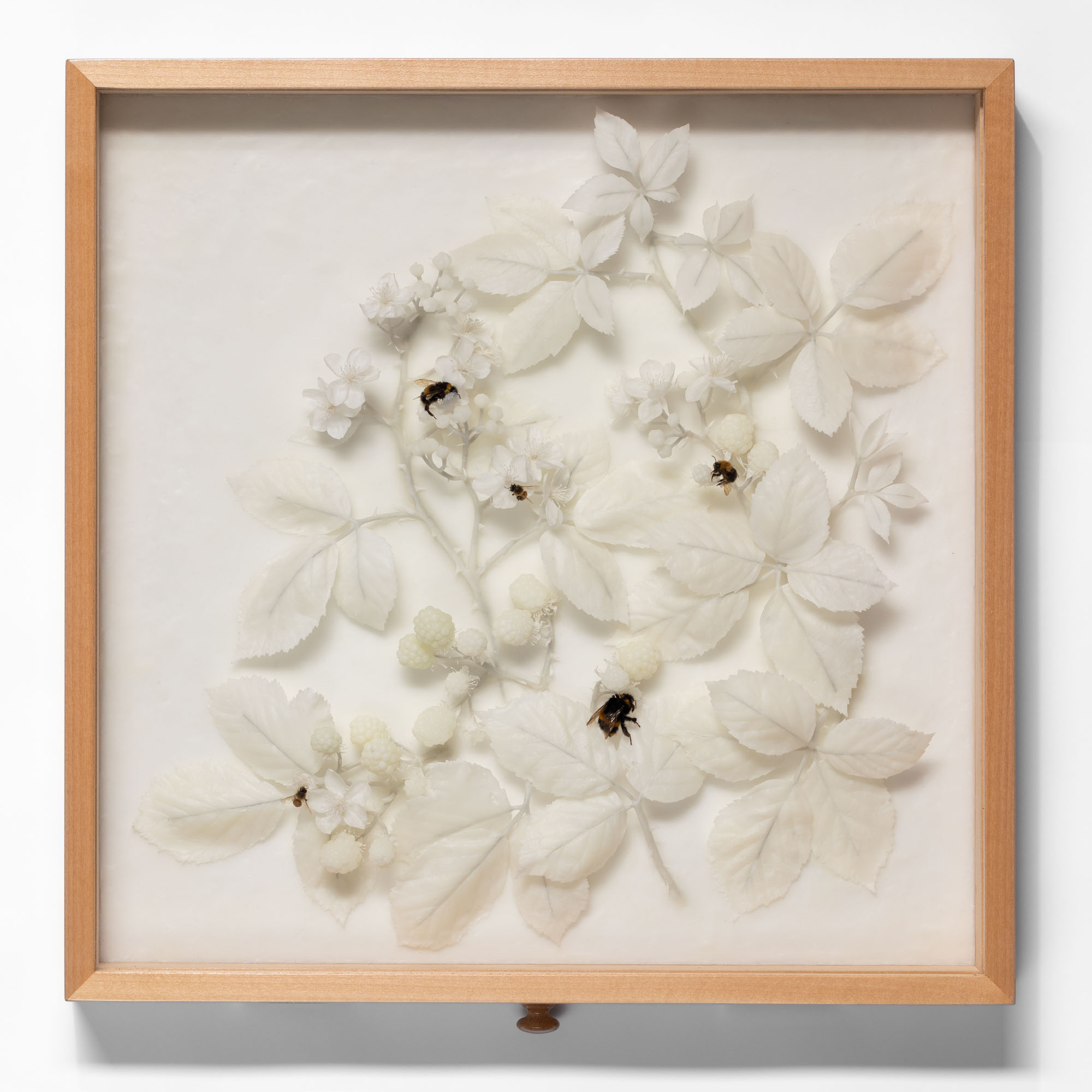
A Study in Black and Gold #1
Materials: Pure bleached beeswax, paraffin wax, tissue paper, tinned copper wire, cotton thread, preserved insect specimens, acrylic paint, acrylic varnish. Mounted in a museum entomology tray.
Dimensions: 46 x 44.5 x 5 cm
Date: 2025
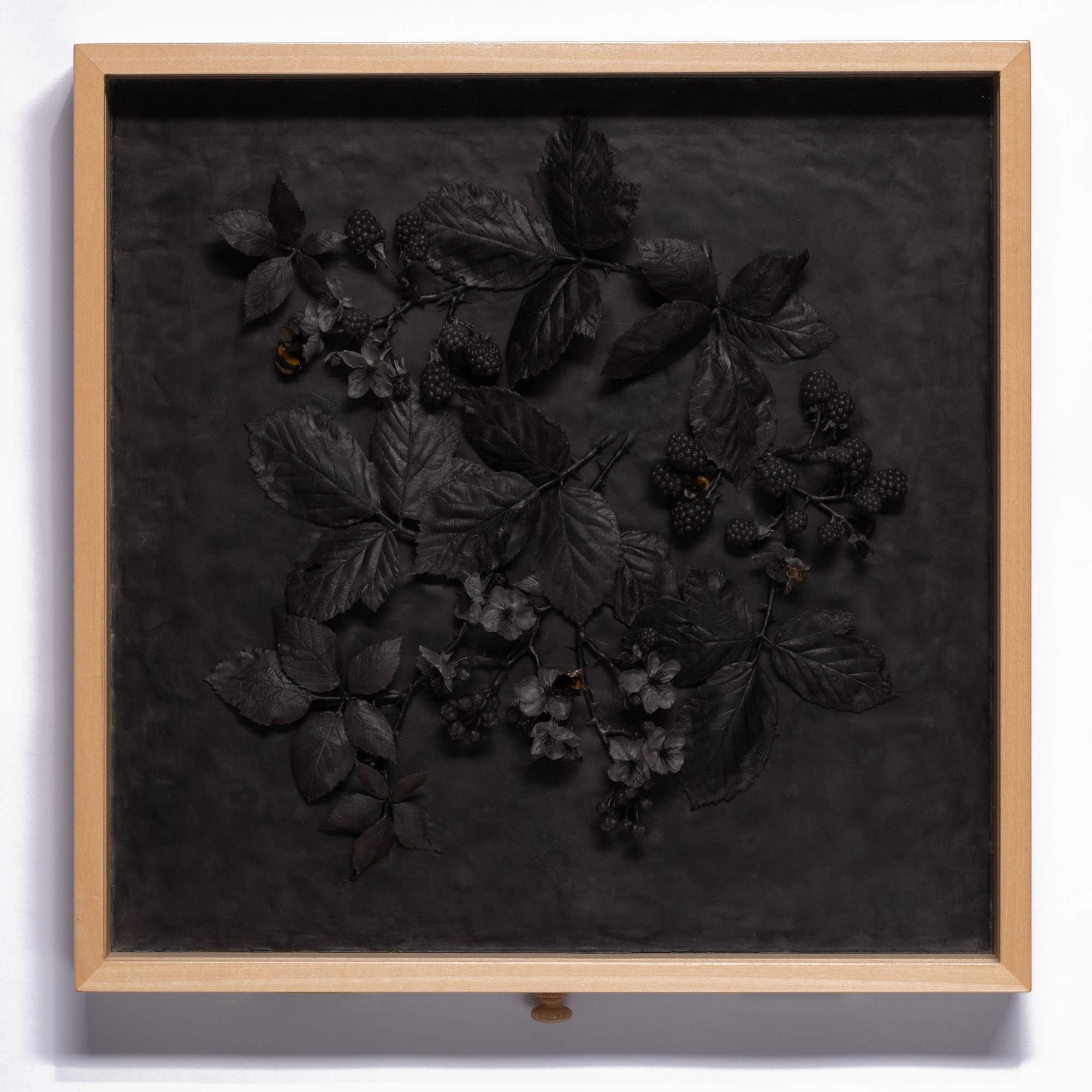
A Study in Black and Gold #2
Materials: Pure bleached beeswax, paraffin wax, artist pigment, tissue paper, tinned copper wire, cotton thread, preserved insect specimens, acrylic paint, acrylic varnish. Mounted in a museum entomology tray.
Dimensions: 46 x 44.5 x 5 cm
Date: 2025