A Study in Black and Gold
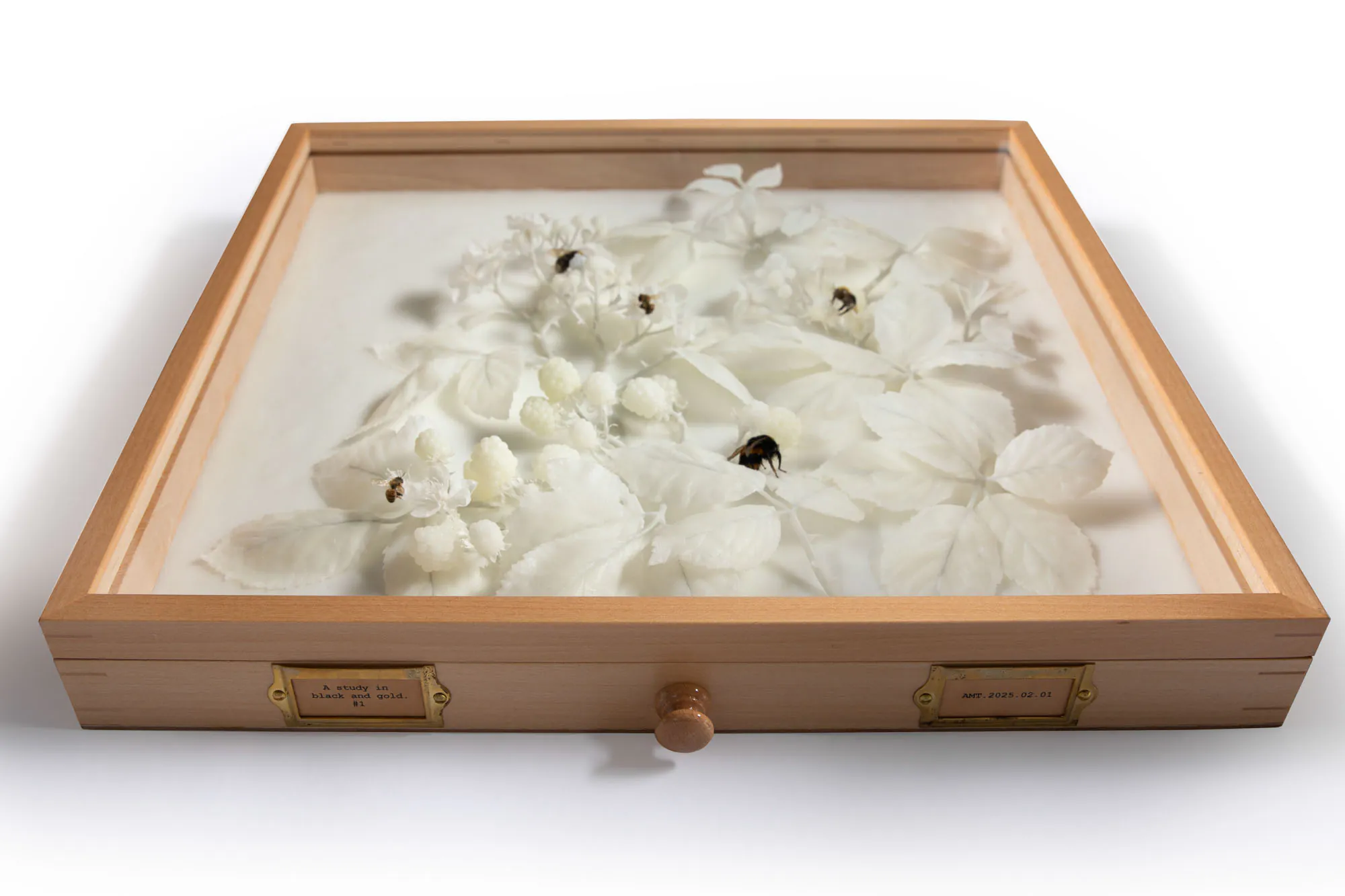
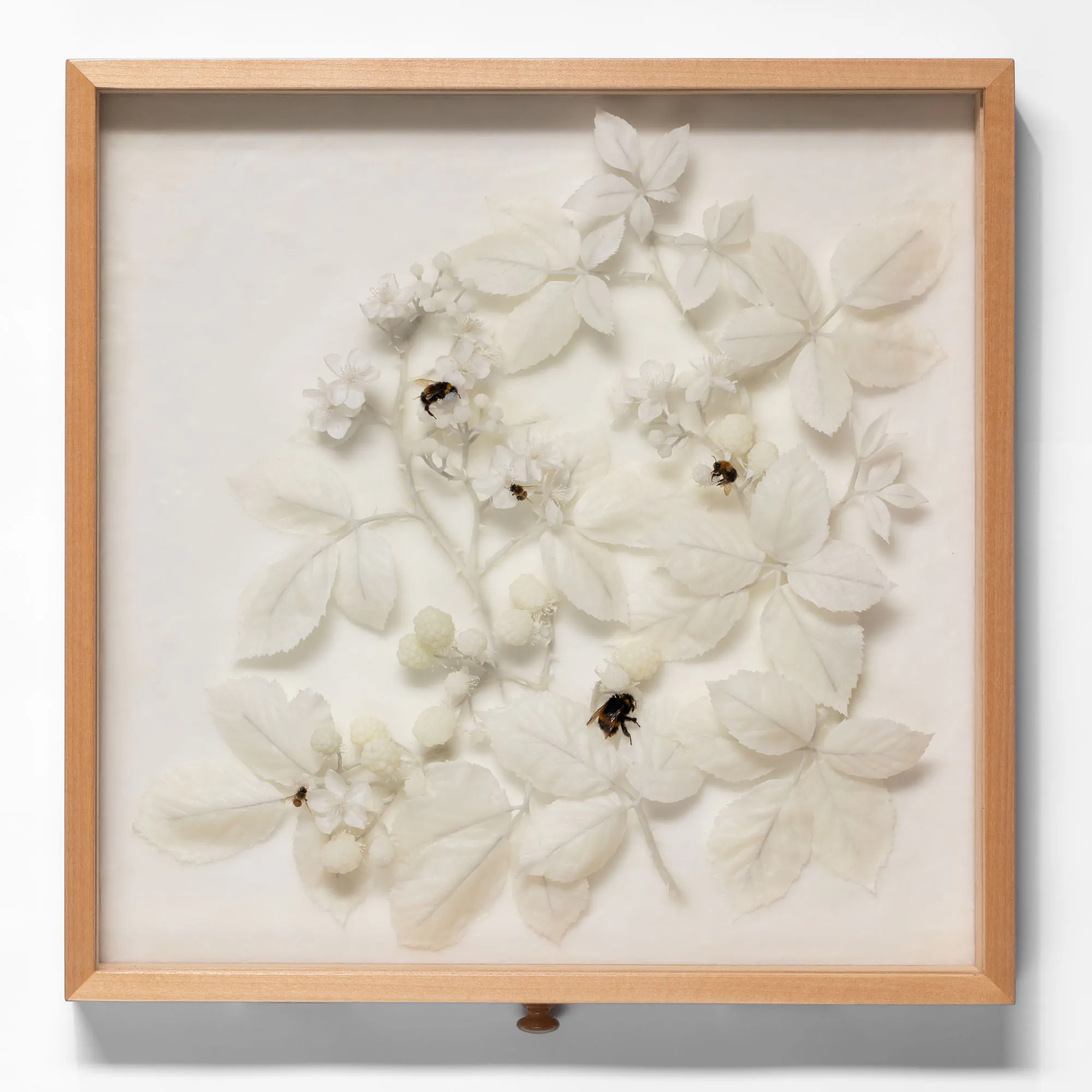
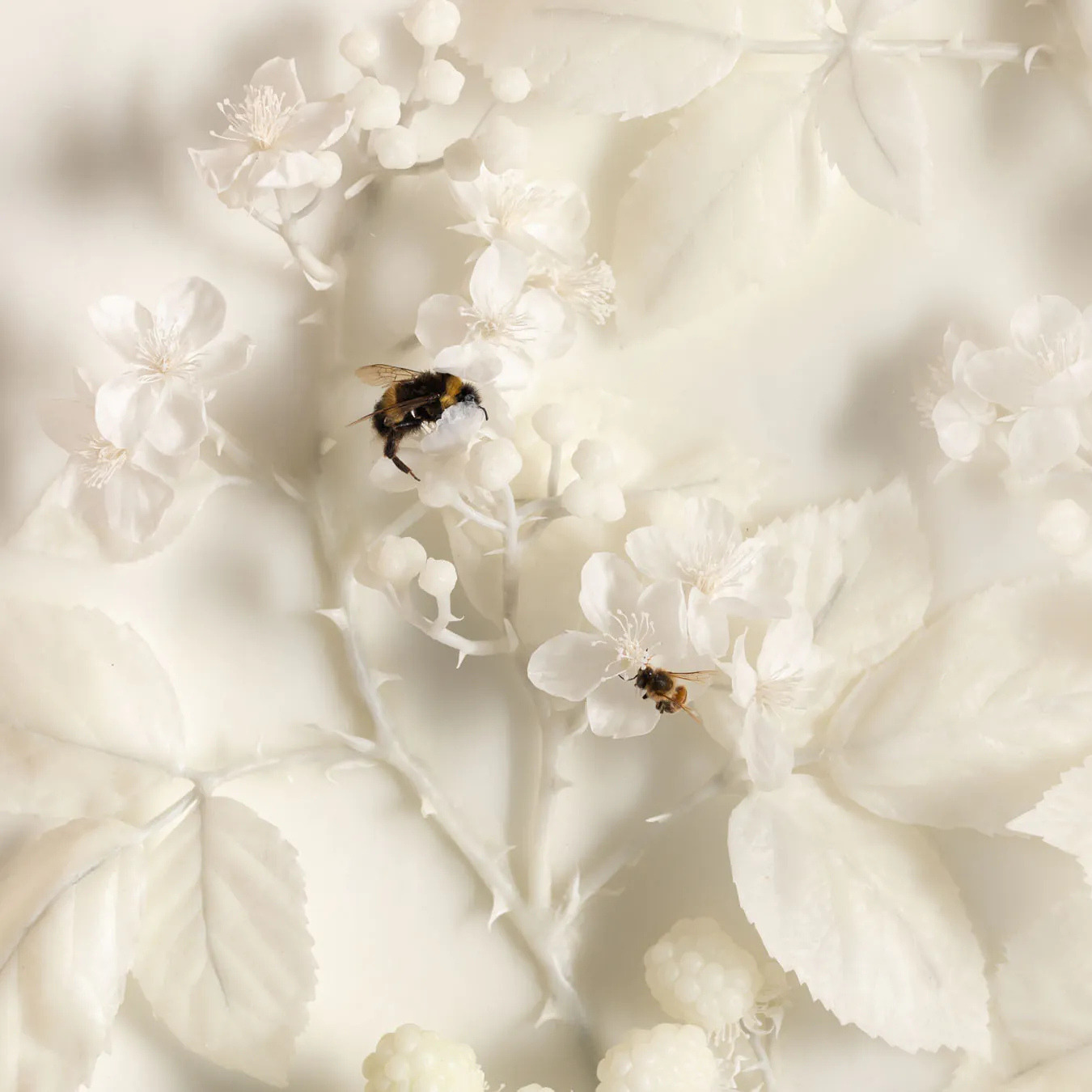
Materials: Bleached beeswax, paraffin wax, artist pigment, tissue paper, tinned copper wire, cotton thread, preserved insect specimens, acrylic paint, acrylic varnish. Mounted in a museum entomology tray.
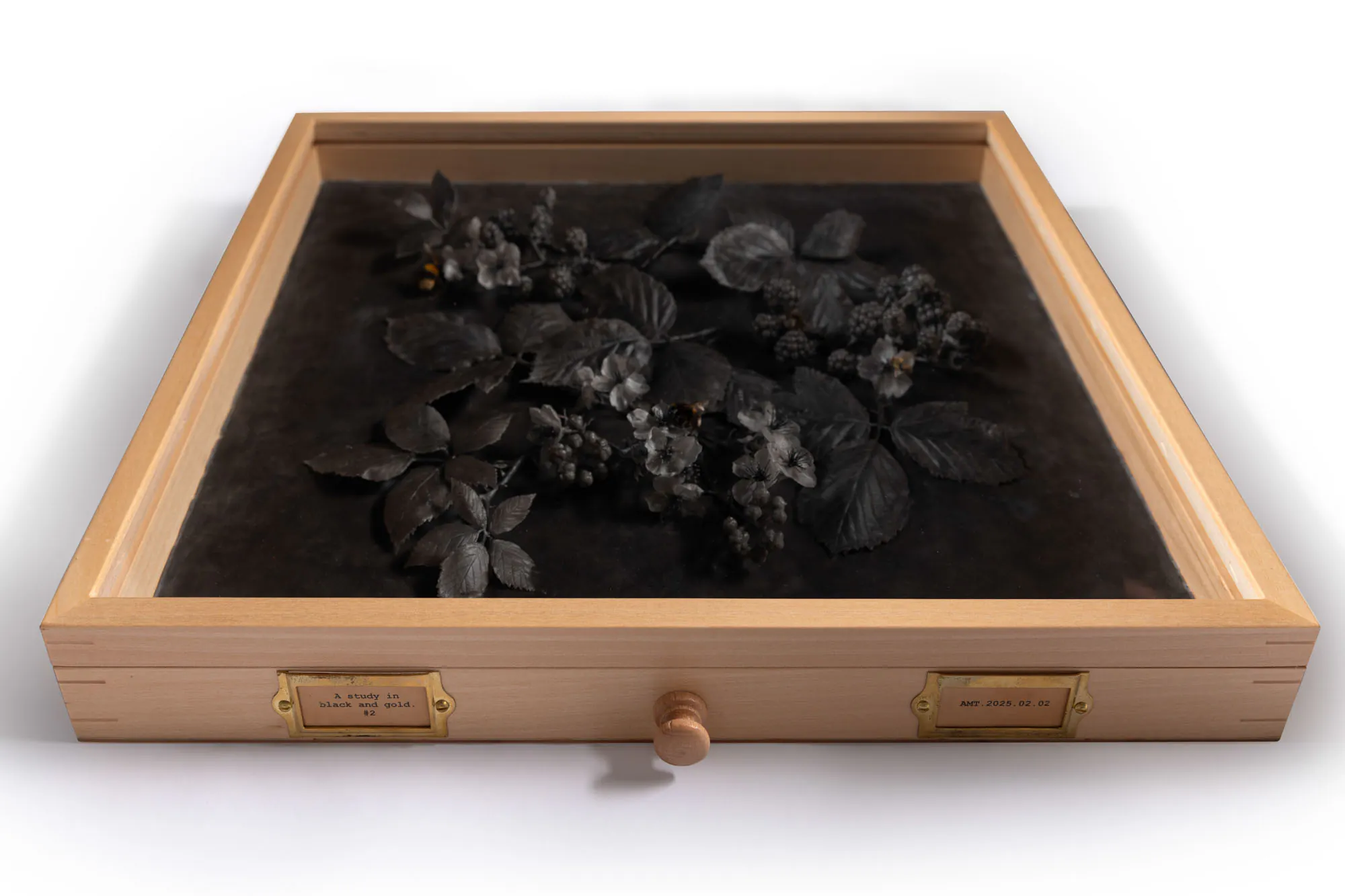
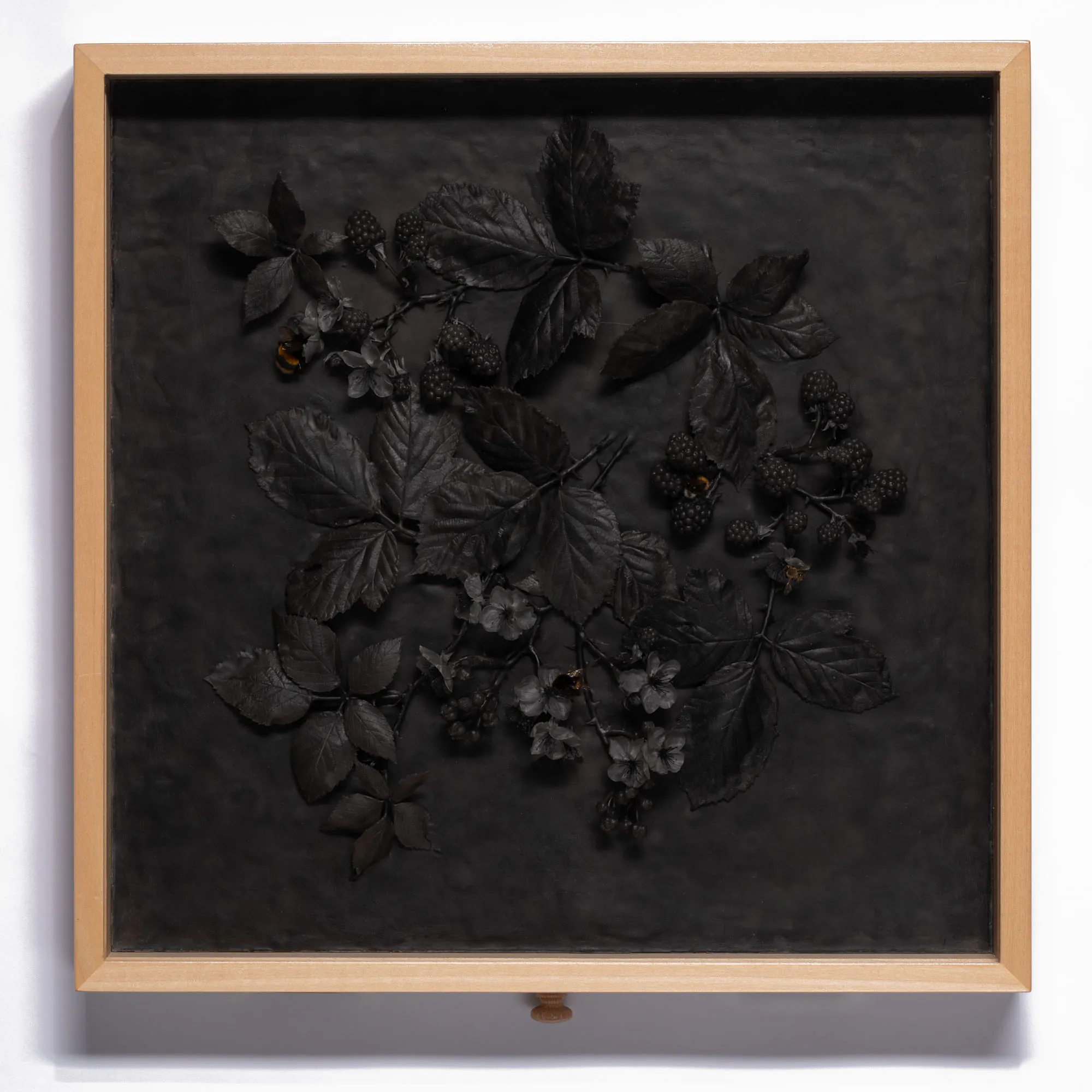
A Study in Black and Gold brings together wax-sculpted blackberry plants (Rubus fruticosus) and preserved insect specimens within authentic museum entomology drawers still used to house pinned scientific collections. The series draws upon Townsend’s observations of nature within an urban environment, alongside memories of her twenty-year career as a natural science conservator at Amgueddfa Cymru – National Museum Wales and the collections in her care during that time.
The work was informed in part by the museum’s internationally significant blackberry collection, which contains approximately 15,000 herbarium specimens and is recognised worldwide as a major scientific reference tool. Townsend recalls long tables of bramble specimens laid out across the museum’s main hall while the collection was being reorganised, revealing the extraordinary complexity of plants often dismissed as common or overgrown. Blackberry species are notoriously difficult to classify, with subtle variations between forms and tangled growth habits that complicate identification. Many specimens within the collection remain unnamed.
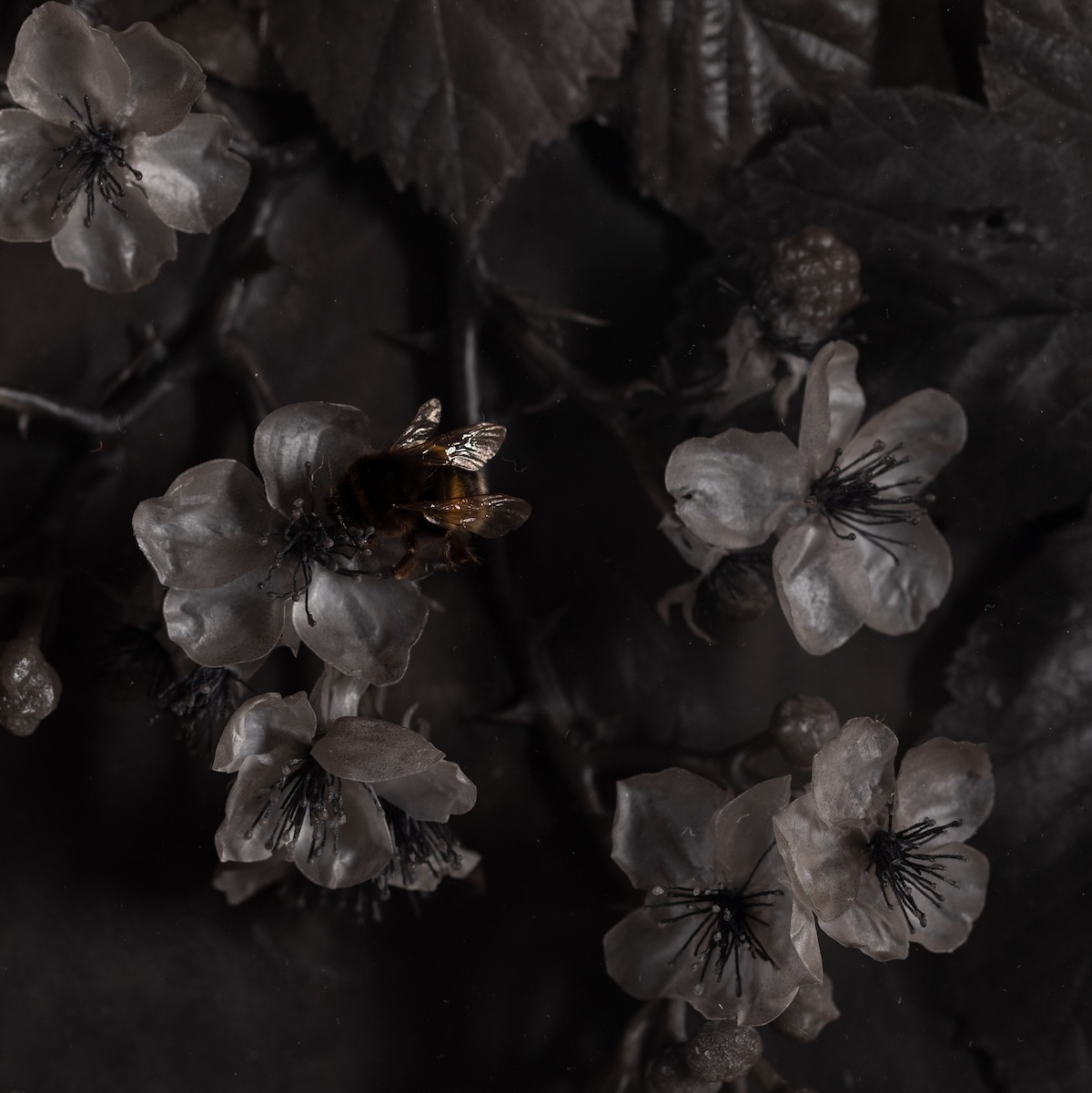
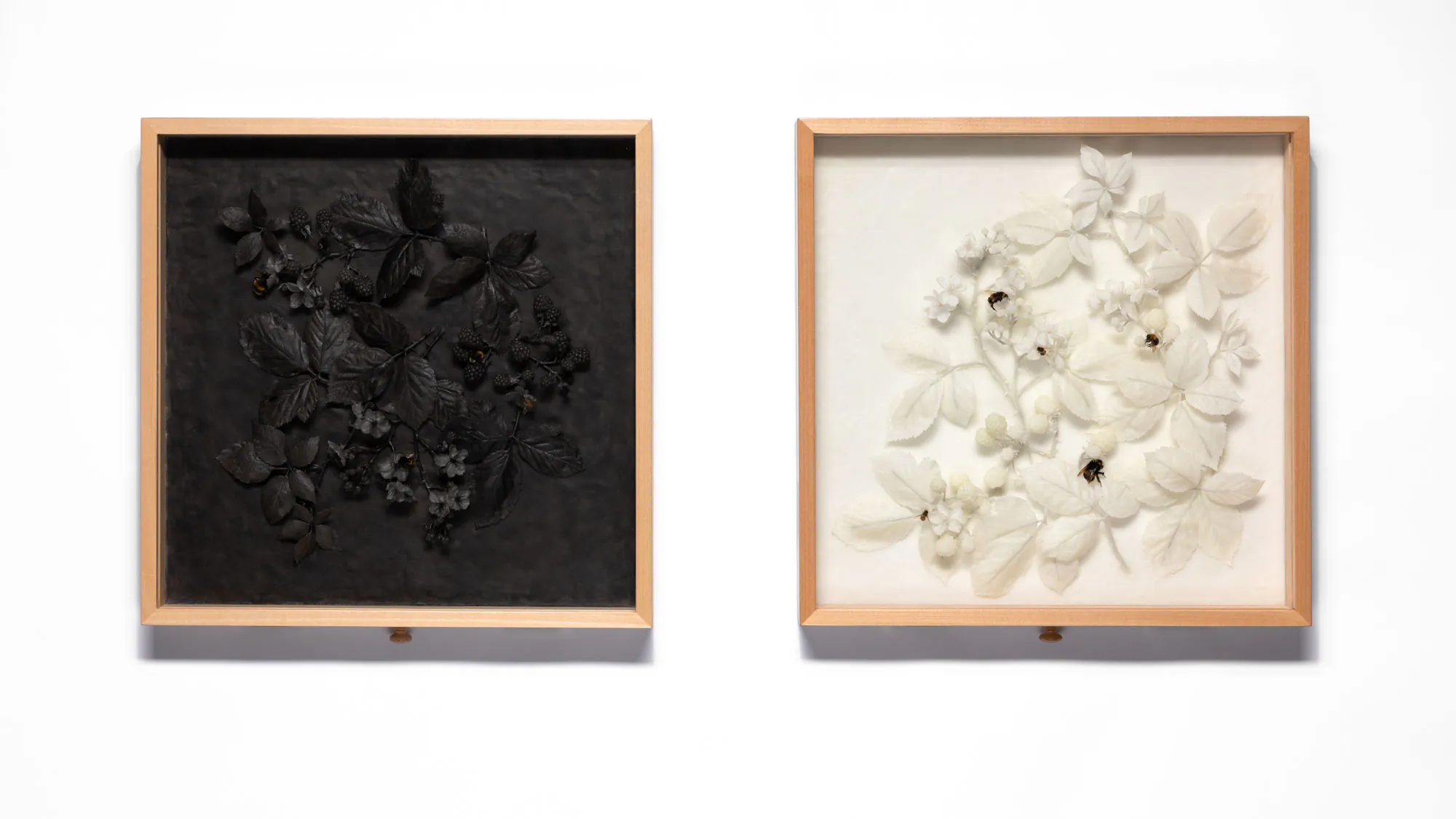
Within the drawers, preserved bees have been repositioned amongst the blackberry flowers in lifelike arrangements, restoring ecological relationships normally separated by museum systems of storage and display. The wax sculpture appears to grow into the ordered structure of the drawer itself, creating small diorama-like habitats where botany, entomology, scientific classification, preservation, and living systems collide.
Rendered in black and white using a combination of natural beeswax and paraffin wax, a by-product of the oil industry, the works move between light and darkness, observation and intervention, conservation and environmental loss.
A Study in Black and Gold #1
Date: 2025
Dimensions: 46 x 44.5 x 5 cm
A Study in Black and Gold #2
Date: 2025
Dimensions: 46 x 44.5 x 5 cm