Tree of the Knowledge of Good and Evil
2023
Dimensions – 20 x 20 x 21cm
Materials – Beeswax, pesticide residues in the beeswax (Difenoconazole, Carbaryl, Indoxacarb, Chlorpyrifos, Cyprodinil, Chlorantraniliprole, Trifloxystrobin, Pyraclostrobin, Fluxapyroxad, Metolachlor, Cyantraniliprole, Atrazine, Tebuconazole, Penthiopyrad, Piperonyl butoxide, Thiamethoxam, Methoxyfenozide, Pyrimethanil, Mandipropamid, Picoxystrobin, Azoxystrobin, Tebuthiuron, Propazine, Fluopyram), tinned copper wire, tissue paper.
Tree of the Knowledge of Good and Evil was developed through an ongoing collaboration with entomologist Scott McArt at Cornell University, using honey bee wax produced during apple pollination in a New York orchard. Analysis identified pesticide residues within the wax at levels exceeding acute exposure thresholds for honey bees, which are listed as part of the material of the work.
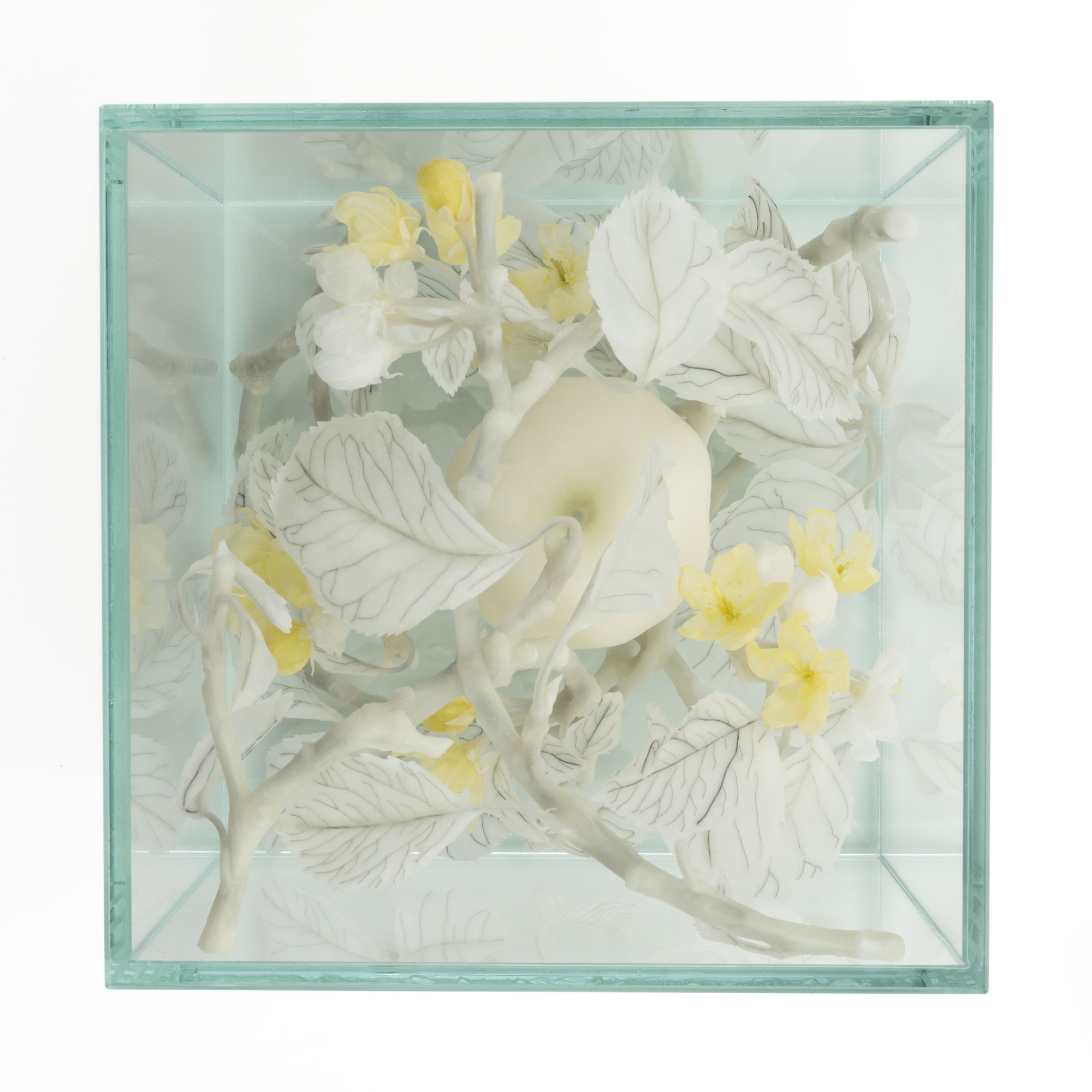
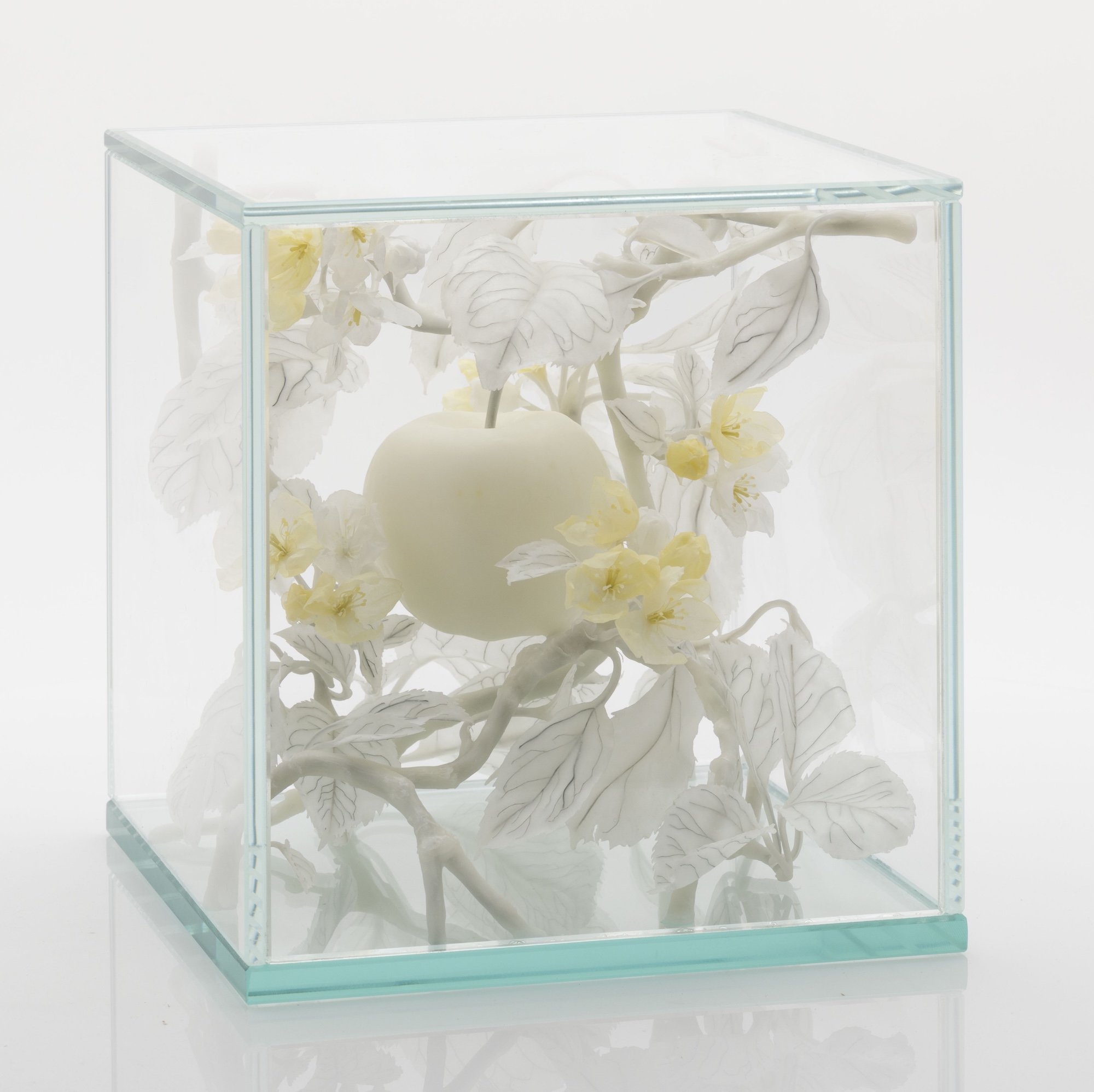
Contained within a glass vitrine, a pale wax apple hangs suspended amongst entwined branches and translucent leaves. Flowers formed from pesticide-contaminated beeswax carry a warmer yellow tone against areas of cooler white wax, quietly distinguishing contaminated and uncontaminated material within the sculpture itself.
Fine wire structures remain visible beneath the wax surface, disrupting the realism of the forms and exposing their internal construction. Different wire gauges trace through the leaves and branches like lines within a drawing, allowing the work to transition between botanical specimen, sculptural object, and three-dimensional sketch. Reflections within the glass deepen this instability, causing the sculpture to appear simultaneously preserved, fragile, and unresolved.
Referencing the biblical Tree of the Knowledge of Good and Evil, the work considers humanity’s complex relationship with cultivated landscapes and the ecological systems that sustain them. Balancing botanical realism with visible signs of construction and containment, the sculpture moves between beauty, fragility, and unease.